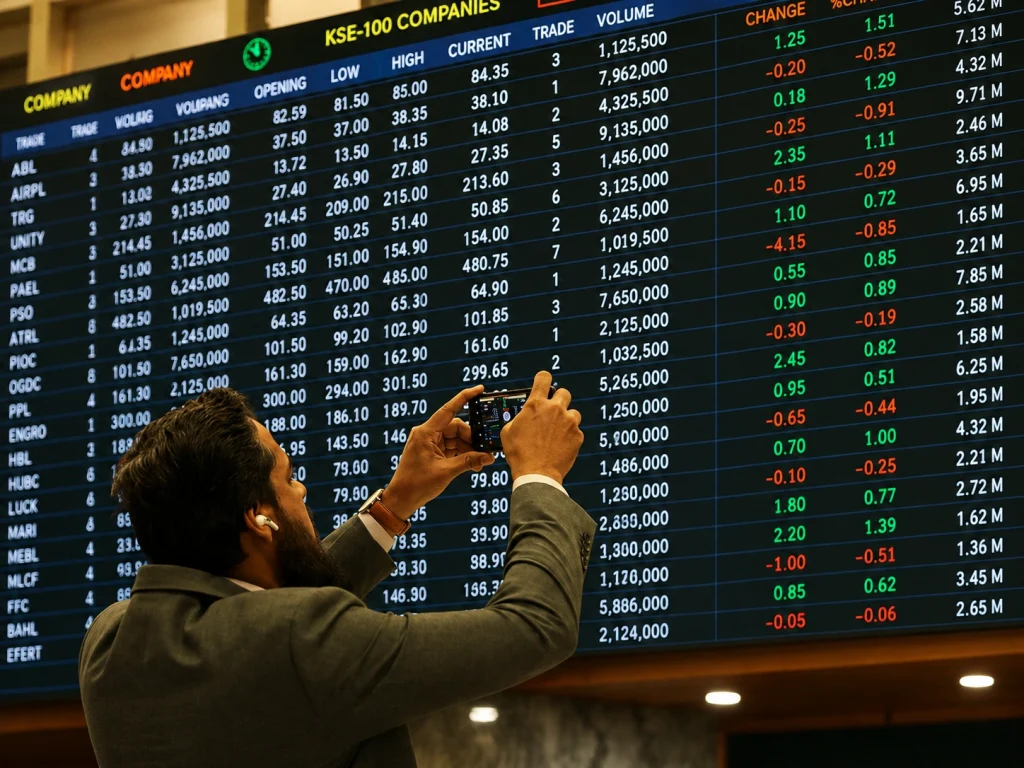
KARACHI: Massive selling engulfed the Pakistan Stock Exchange today in the early hours of trading after US-Iran tensions sent all investors scrambling out of the market, causing the index benchmark, KSE-100 falls more than 3,600 points in the initial stages of trading.
The fall in the KSE-100 due to Iran-US blockade shock comes at a time when the market has already suffered losses in two successive trading sessions due to geopolitical developments.
At 9:43am today, the index was at 176,309.50, down 3,617.54 points or 2.01 percent compared to the last day’s closing.
This 1.27% KSE-100 falls on Monday and 2.01% decline on Tuesday morning can be attributed to the severity of the deterioration in the geopolitical environment overnight, from abstract geopolitical tension to a concrete threat by the US to block the shipment of oil through the Strait of Hormuz.
What caused the selloff on Tuesday?
US President Donald Trump made an announcement stating that America is imposing again its naval blockade of the shipment of Iran through the Gulf and will charge a 20 percent tariff on goods transported through the Strait of Hormuz.
The Strait of Hormuz transports roughly 20% of global oil production. The threat posed by a naval blockade of Iran by the US forces that restrict shipments from Iran and impose charges on all shipments through the Strait generates market uncertainty in terms of supply and price almost instantaneously.
Cross-Sector Sales
There was no respite for any sector from the selloff triggered by the Iran-US blockade in the KSE-100 market. All major sectors, affecting the stock index, were down during Tuesday’s trading session:
- Oil and gas exploration companies: MARI, OGDC and PPL were down even as the price of crude oil rose
- OMCs: worries over prices and supply chain disruption affecting marketing firms
- Cement: construction industry vulnerable to slowdown in the economy
- Commercial Banks: MCB, MEBL and UBL were all down on worries of credit risk
- Automobile Assemblers: consumer industry vulnerable to inflation and economic slowdown
- Electric Power: HUBCO and other electric power generation companies were down on fuel price concerns and circular debt issues
Selling at the same time in different sectors proves that this is a macro fear event and not sector-specific information because investors are reducing equity exposure overall, not sector rotation.
Oil Rallies – Adds to Suffering of Pakistan
The oil market saw the biggest one-day move ever in history on Tuesday with brent crude oil futures rising by 2.6% to $85.50 a barrel – their highest since June 16th. Over night in New York, oil futures rallied up by over 9% due to the renewed tensions between US and Iran.
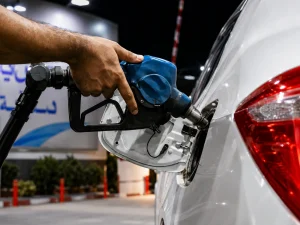
Petrol prices increased by the government to Rs 310.71 per liter recently based on the expectation of low oil prices. But should the price of Brent continue at $85.50 or move even higher, then another price adjustment will become imminent.
Federal Rate Increase Likelihood Increases — The Second Hit
Following the drop of the KSE-100 as result of the Iran-US sanctions blockage, another macroeconomic headwind came at the same time. In an interview on Monday, Federal Reserve Governor Christopher Waller warned that the central bank of America would need to increase interest rates “in the near term” if the rate of inflation remains much above 2 percent.
If there is an increase in the interest rates of the Federal Reserve Bank during the meeting that is scheduled to be held from July 28-29, then it will increase the value of US dollars, cause depreciation of emerging economies’ currencies like the Pakistani rupee and also lead to higher debt service costs for Pakistan.
International Markets Also Jolted – but to a Lesser Extent
The global stock markets had divergent reactions to the surprise overnight news. The Asia-Pacific Index ex-Japan of MSCI increased by 0.4%, while the Korean stocks recorded a gain of 2.2%. The Nikkei 225 of Japan increased by 0.2%, and the futures of S&P 500 fell by 0.1%. It can be said that the international markets are taking the situation between Iran and US with more ease than Pakistan’s PSX.
The KSE-100 falls of more than 2 percent at the opening on Tuesday is a clear indication of the high exposure the index has to risks emanating from geopolitical issues affecting oil prices, just like it was the case at the beginning of 2026 when Iran-US relations deteriorated.

Nayab Fatima is a media professional specializing in fact-based journalism, research, and analytical reporting on technology, telecom, aviation, and automobiles.